 Seeds Exporter
How to import seeds from Pakistan: the complete buyer guide
Importing seed from Pakistan takes four to eight weeks from first enquiry to container arrival at a Gulf port, and eight to twelve weeks for Europe, East Asia or the Americas. The critical path is not production; it is the import permit on your side and the phytosanitary certificate wording on ours. This guide walks through the sequence, the documents, the incoterms and payment terms, the realistic timelines and the mistakes that cost importers a sowing season.
Step 1: confirm your country's import requirements
Before asking for a price, find out what your national plant protection organisation (NPPO) requires for the seed you want. Most countries need (a) an import permit or quarantine permit issued to the importer, and (b) a phytosanitary certificate from Pakistan's Department of Plant Protection that repeats the permit's additional declarations word for word. Some add pre-shipment inspection (Iraq), registration of the exporter (China GACC), or an online pre-notification (EU TRACES CHED-PP, UK IPAFFS, Australia BICON). The country pages list the authority and documents for 56 destinations.
Get the permit first. It is the only document we cannot obtain for you, and a permit issued after the seed is loaded means a container sitting at port on demurrage.
Step 2: request a quote with the right details
A quote request that gives product, quantity, destination port, required arrival date and any specification beyond our standard (treated seed, 50 kg bags, private label, organic) gets a pro forma invoice back within 24 hours. Prices are in USD per kg or per MT, FOB Karachi by default, CIF on request. How pricing is built is explained on seed prices and MOQ.
- Product and variety (e.g. alfalfa KN92, forage sorghum BMR 313)
- Quantity: number of containers or MT; MOQ is 1 x 20ft for most seed
- Destination port and incoterm (FOB Karachi, CIF Jebel Ali, etc.)
- Required arrival date, so we can tell you whether new crop or prior crop applies
- Import permit number and any additional-declaration wording it demands
Step 3: samples and lab report
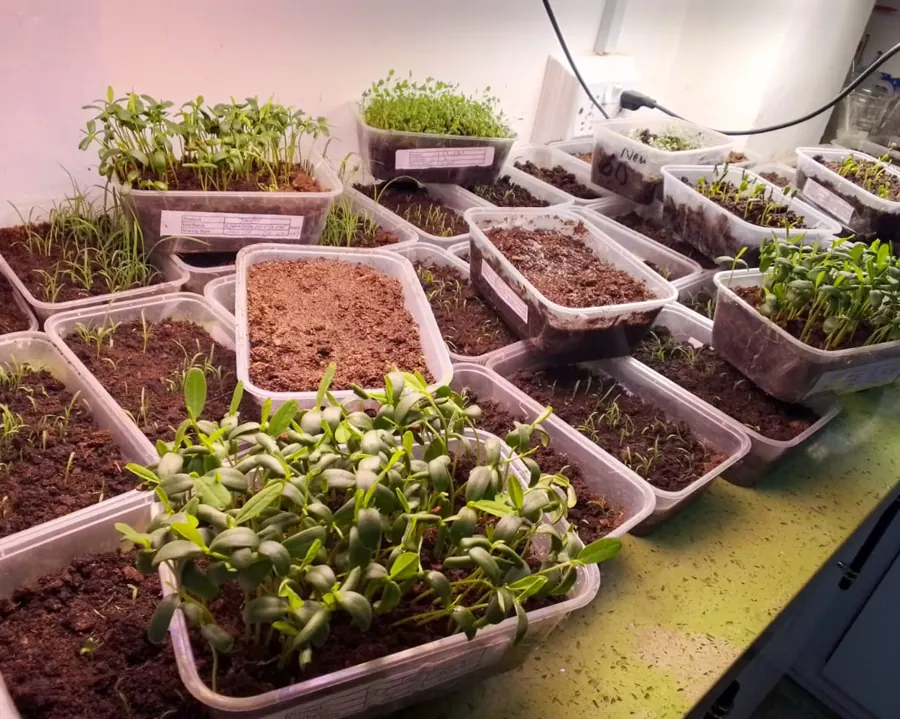
We courier a 500 g to 1 kg sample from the offered lot with the current ISTA-format test report. Many buyers send the sample to their own NPPO or an ISTA station; we accept that result as the reference. Once you approve, the lot is reserved for 14 days pending contract.
Step 4: contract, incoterms and payment
Incoterms. FOB Karachi / Port Qasim means we deliver the loaded container on board and you arrange freight and insurance through your forwarder; it gives you control of freight cost and is the norm for repeat buyers. CIF (named port) means we book and pay freight and insurance to your port; simpler for first orders. Under both terms, import duty, port charges and clearance at destination are yours. EXW and CFR are available on request; we do not offer DDP.
Payment. Two options: an irrevocable letter of credit at sight, or 30% advance by bank transfer with 70% against a scanned copy of the bill of lading. LC costs more in bank charges but suits first orders over USD 50,000. Documents under an LC must match the credit exactly, so send us the LC draft before it is opened.
| Term | We arrange | You arrange | Best for |
|---|---|---|---|
| FOB Karachi | Cleaning, packing, documents, loading on board | Freight, insurance, destination clearance | Repeat buyers with a forwarder |
| CIF destination port | All of the above plus freight and marine insurance | Destination clearance, duty, inland delivery | First orders, buyers without a forwarder |
| CFR | As CIF but without insurance | Insurance and clearance | Buyers with open cover policies |
| Road (Afghanistan, Iran, Central Asia) | Truck to border or destination as agreed | Border clearance | Land-locked buyers |
Step 5: production, inspection and loading
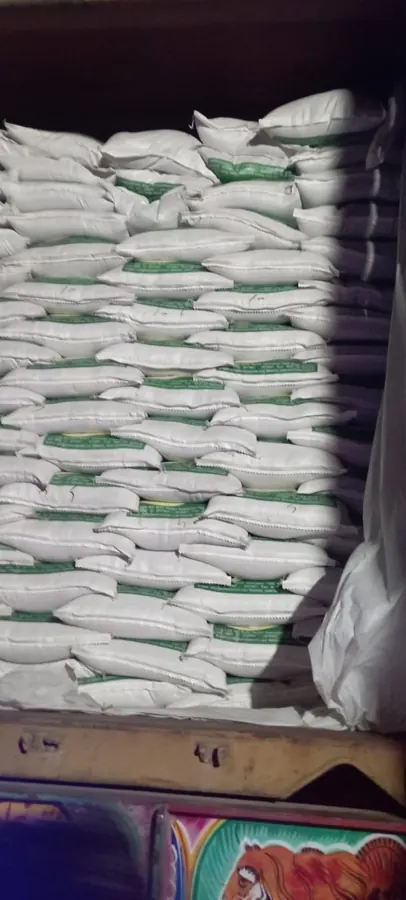
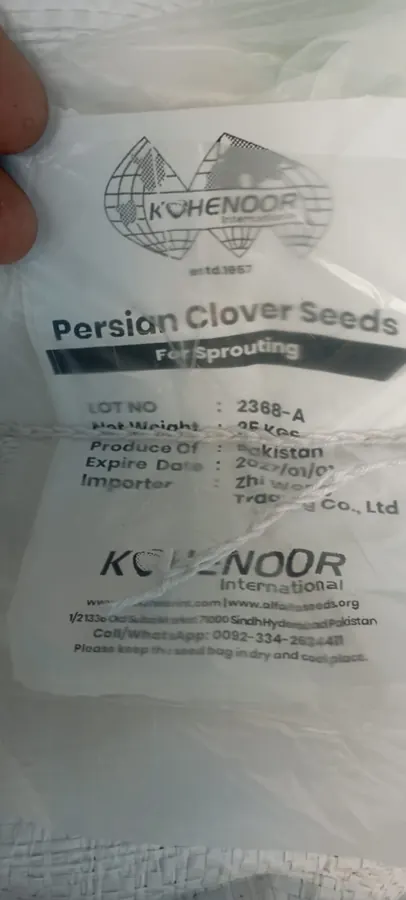
After payment or LC advice, the lot is final-cleaned, bagged and re-tested if the certificate is older than 90 days. A DPP inspector samples the bagged lot at our warehouse and issues the phytosanitary certificate; the chamber issues the certificate of origin; fumigation, if required, is done in the sealed container 24–48 hours before gate-in. Loading is photographed bag by bag and the photos go to you the same day. See the container loading guide for weights per container and stuffing patterns.
Timelines: what to expect
| Stage | Typical time | Notes |
|---|---|---|
| Quote / pro forma | 24 h | Longer only if a custom spec needs a lab check |
| Sample by courier | 3–6 days | DHL/FedEx at cost; free for trial lots under 1 kg |
| LC opening / advance receipt | 3–10 days | Depends on your bank |
| Cleaning, bagging, re-test | 10–20 days | Shorter for stock lots, longer for treated or private-label |
| DPP inspection and phytosanitary certificate | 2–4 days | Booked once bags are stacked |
| Certificate of origin | 1–2 days | Chamber, Hyderabad |
| Fumigation (if required) | 2 days | Phosphine or methyl bromide, in container |
| Vessel booking to sailing | 5–10 days | Weekly services from Karachi to most hubs |
| Sea transit, Gulf | 5–12 days | Sohar 5, Jebel Ali 7–10, Jeddah 8–12 |
| Sea transit, East Africa / Med | 10–20 days | Port Sudan 10–14, Mombasa 12–16, Alexandria 12–16 |
| Sea transit, East Asia / Europe | 18–28 days | Qingdao 18–24, Rotterdam 22–26, Busan 20–25 |
| Sea transit, Americas | 30–45 days | Los Angeles 30–40, Santos 35–45 |
| Road, Afghanistan | 2–5 days | Via Torkham or Chaman |
Common mistakes that cost a season
Every one of these has happened to an importer we later supplied.
- Ordering after the permit, not before. Permits in Egypt, Kenya, Ethiopia and Indonesia can take 3–6 weeks. Apply when you request the quote.
- Permit wording not passed to the exporter. If the permit demands 'free from Cuscuta spp.' or 'grown in an area free of Ditylenchus dipsaci', that phrase must appear on the phytosanitary certificate. Send us the permit.
- Buying on price alone. A 5% lower price on 80% germination seed costs more per viable seed than 85% seed, and a lot without a Sortex pass can carry dodder that gets the whole field quarantined.
- Wrong HS code on the import declaration. Alfalfa is 121410, clovers 120922, sorghum 100710, guar 071340. A mismatch between permit, invoice and declaration holds the container.
- Ignoring the season. Alfalfa new crop is available from June, sorghum from November. Ordering alfalfa in April means prior crop, which is fine if you know it and re-tested, and a problem if you expected new crop.
- LC wording that cannot be met. Requiring 'ISTA orange certificate' when the exporter issues an ISTA-format report from its own lab, or a shipment date before the vessel exists. Send the draft LC first.
- No moisture-controlled storage at destination. Seed at 10% moisture stored at 35 °C in a port shed loses germination within weeks. Plan cool storage or sow promptly.
After arrival
Sample the seed on arrival using the same method as the lab (a composite of at least 10 bags), keep the sealed bag labels, and test within two weeks. If a result differs from our certificate by more than the ISTA tolerance, tell us within 30 days with the lab report and we will re-test the retained reference sample and settle any difference. Buyers who plan to reorder for the next season should tell us by the end of the current one so that we allocate new-crop volume; see the availability calendar.
Frequently asked questions
Do I need an import permit to buy seed from Pakistan?
In most countries, yes. Gulf states, EU members and the UK generally do not require a permit for cleaned seed but do require a phytosanitary certificate and pre-notification; Egypt, Iran, Kenya, Ethiopia, Indonesia, Vietnam, Uzbekistan, Kazakhstan, Brazil, Argentina and Australia require a permit issued to the importer before shipment. Check the country page or ask your NPPO.
What is the difference between FOB and CIF for seed from Pakistan?
FOB Karachi: our price covers everything until the container is on board; you pay freight, insurance and destination costs. CIF: our price also includes sea freight and marine insurance to your named port. Duty, port charges and clearance at destination are yours under both.
Can I pay after receiving the seed?
Not on a first order. We work on LC at sight or 30% advance / 70% against BL copy. After several shipments, longer terms can be discussed. We never ask for 100% advance.
How long does a phytosanitary certificate take in Pakistan?
Two to four days after the bagged lot is ready for DPP inspection. It is issued in Karachi and covers the exact lot, quantity, container and additional declarations requested by the importer.
Can you ship less than a container?
Yes for sprouting seed, rose petals, pine nuts, sea buckthorn and on some spice lines, by LCL (groupage) or air freight. For forage seed the economics favour a full 20ft; LCL forage seed costs 20–40% more per kg delivered.
What happens if germination on arrival is lower than certified?
Notify us within 30 days with your lab report and the sealed bag labels. We re-test the retained sample from the same lot; if the difference exceeds ISTA tolerance we agree a price adjustment or replacement. In practice this is rare because we re-test before dispatch and ship in moisture-proof bags.
Get today's FOB rate
Tell us the product, quantity and destination port. The export desk replies within 24 hours with price, MOQ, documents and transit time.
export@kohenoorint.com · +92 310 4929292 · Reply within 24 hours