 Seeds Exporter
Nigella (Kalonji) Seed exporter — Pakistan origin
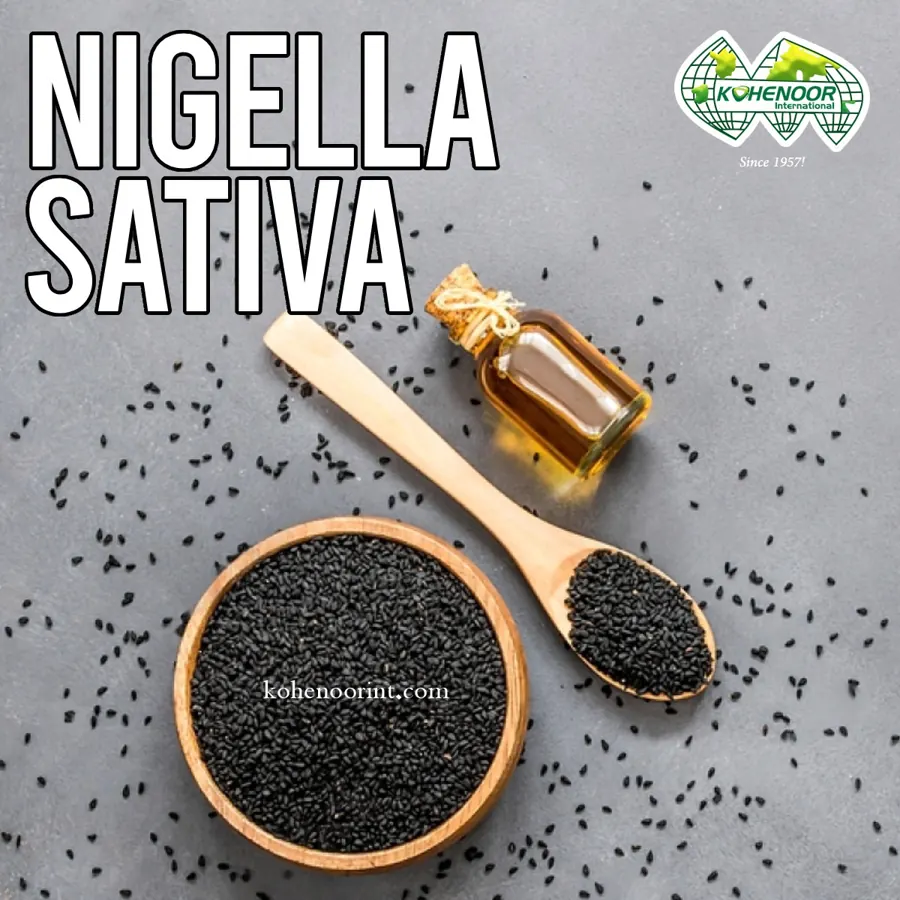
Nigella sativa (kalonji, black seed) is exported by Kohenoor International at 99% purity, machine-clean and Sortex-sorted, under HS 120799 in 25 kg bags. Pakistan's crop is harvested March–April in Punjab and Sindh and ships to the UAE, Saudi Arabia, Egypt, Türkiye, Germany, the UK and the US.
Buyers split into spice traders, who need uniform jet-black colour and low admixture, and oil pressers and supplement makers, who buy on oil content (32–38%) and thymoquinone level, both reported on the certificate of analysis.
Quick answer
Specification
Standard export specification for nigella (kalonji) seed, as it appears on the pro forma invoice and the lot report. Custom specifications (higher purity, treated seed, different pack, private label) are quoted on request.
| Parameter | Specification |
|---|---|
| Botanical name | Nigella sativa |
| HS code | 120799 |
| Varieties / grades | Machine clean |
| Purity | 99% min |
| Germination | Not tested — edible / industrial grade |
| Grade | Machine clean, Sortex |
| Moisture | 8% max |
| Admixture / foreign matter | 1% max (0.5% Sortex) |
| Immature / light seed | 2% max |
| Oil content | 32–38% |
| Thymoquinone (in oil) | 0.5–1.5%, reported on request |
| Volatile oil | 0.4–1.0% |
| Thousand-seed weight | 2.5–3.0 g (approx. 350,000 seeds/kg) |
| Colour / appearance | Uniform matte black, angular, no brown seed |
| Total ash | 7% max |
| Salmonella (25 g) | Absent (on request) |
| Aflatoxin | Tested per lot for EU / US |
| Packing | 25 kg |
| MOQ | 1 x 20ft |
| Origin | Pakistan (Sindh / Punjab unless stated) |
Varieties and grades
Machine clean. De-stoned, air-screened seed at 99% purity, the grade for oil pressing and industrial spice blending where a small percentage of light or brown seed does not matter. It is the volume grade and the lowest priced.
Sortex. Optically sorted to 99.5% with uniform matte-black colour and no brown or immature seed, for retail spice packing, bread and pickle manufacturers who use the seed whole, and supplement makers who want a clean visual standard. Sortex grade also has slightly higher oil content because light seed is removed.
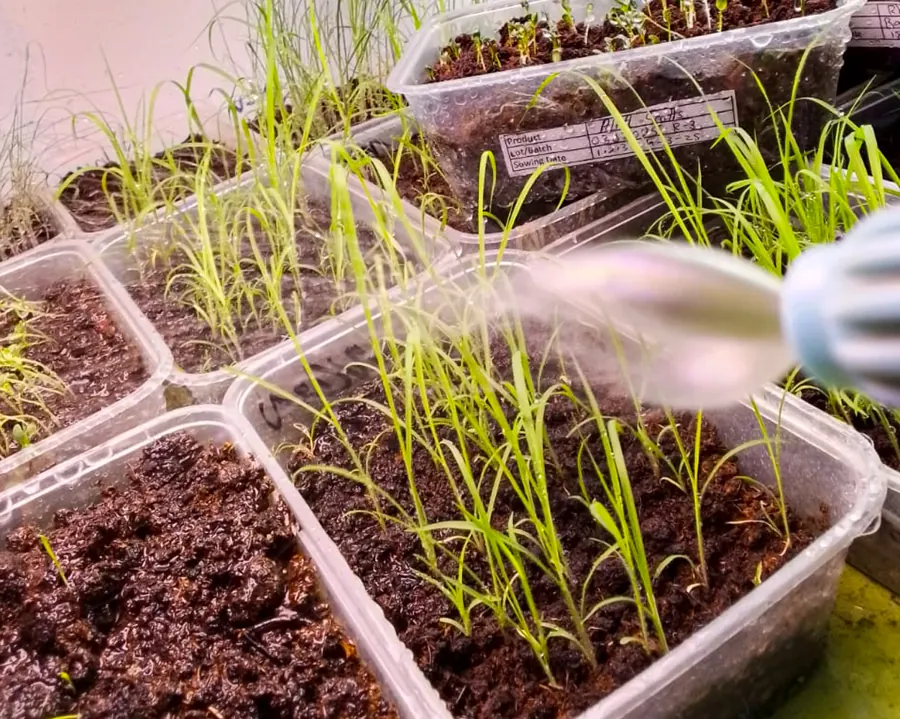
Both grades come from the same Punjab and Sindh crop. A sowing grade with an ISTA-format germination report can be supplied to Central Asian growers on request; the botanical name on all documents is Nigella sativa, which is a different plant from black cumin (Bunium persicum) and black sesame.
Uses by industry
Who buys nigella (kalonji) seed from Pakistan and what they do with it.
- Whole-spice traders and bakers. Topping for naan, bread and crackers and an ingredient in pickles and spice blends across South Asia, the Middle East and Türkiye.
- Cold-press oil producers. Black seed oil for the health-food market in Germany, the UK, the US and the Gulf; bought on oil content and thymoquinone.
- Supplement manufacturers. Capsules, softgels and standardised extracts; COA with oil and thymoquinone values.
- Traditional medicine. Habbat al-barakah in Gulf and Egyptian traditional formulations.
- Cosmetic makers. Oil for skin and hair products in the EU and Gulf.
- Seed growers. Sowing-grade nigella for Central Asian growers on request.
Quality control and testing
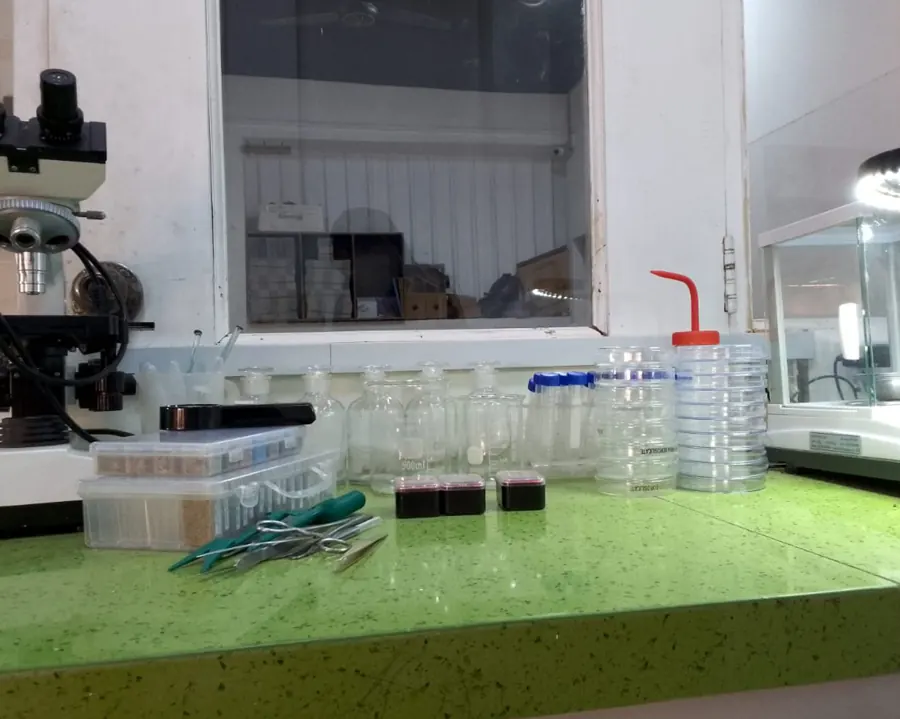
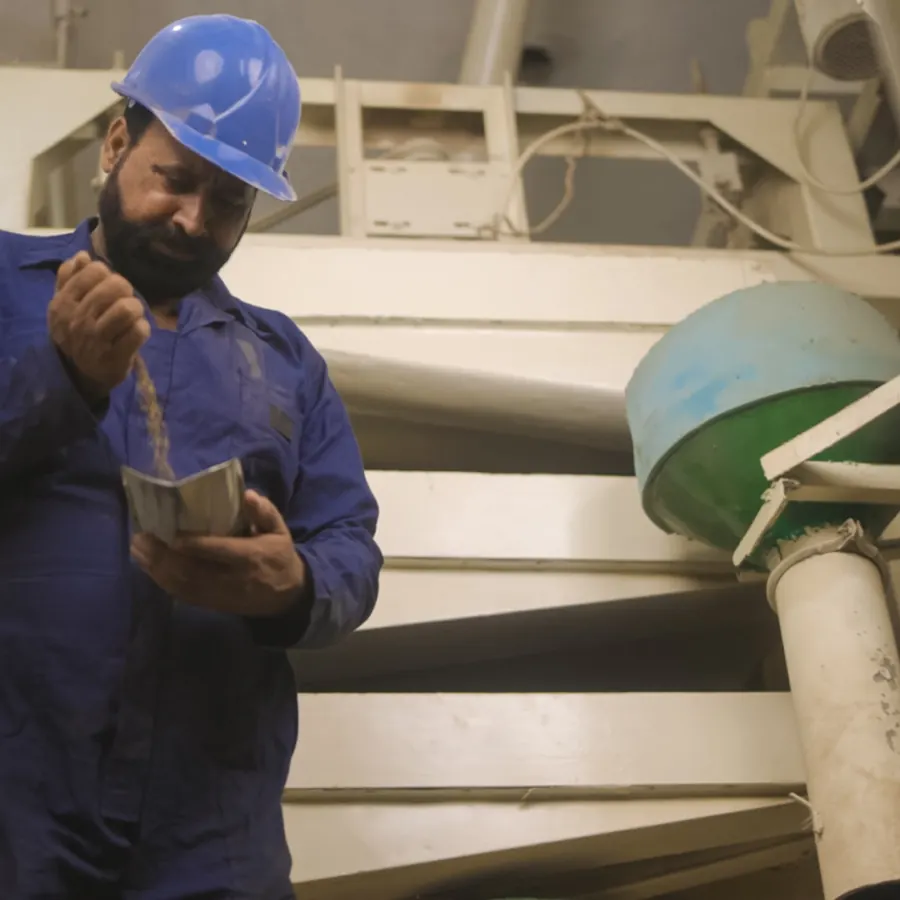
Nigella (Kalonji) Seed is an edible or industrial product, so the release test is a certificate of analysis rather than a germination test. Our laboratory checks moisture, admixture and foreign matter, colour and size uniformity, bulk density and, where the buyer specifies it, oil content; an accredited third-party laboratory in Karachi runs microbiology (Salmonella spp., E. coli, total plate count, yeast and mould), aflatoxin B1 and total, pesticide-residue screens and, for EU and UK lots, ethylene oxide. Every lot passes Buhler Sortex optical sorting after air-screen cleaning and de-stoning, which is what takes admixture below 1% and removes discoloured seed, stems and stones.
Sampling follows the same rule as seed: at least 10% of bags, composite sample, 1 kg sealed reference retained for 12 months. The COA carries the lot number printed on the bags, and an MSDS is issued for the shipment. HACCP procedures cover the cleaning line, storage and bagging.
Nigella is released on a COA covering moisture, admixture, immature seed, oil content by Soxhlet, total ash and colour; thymoquinone in the oil is measured by HPLC at a third-party laboratory on request for oil pressers and supplement makers, and EU, UK and US lots carry aflatoxin, pesticide MRL and, on request, Salmonella results. Seed is de-stoned, air-screened and Sortex-sorted, then metal-detected before bagging under HACCP.
How to verify on arrival. Take a composite sample from at least 10 bags, seal it, and send it to your usual food laboratory within 14 days. Moisture and admixture should be checked first because they are the parameters most likely to drift in transit; microbiology and residues are compared against the COA method and detection limit. If a result differs beyond method uncertainty, send the report and bag labels within 30 days and we re-test the retained reference sample at the same accredited laboratory.
Packing, loading and shipping
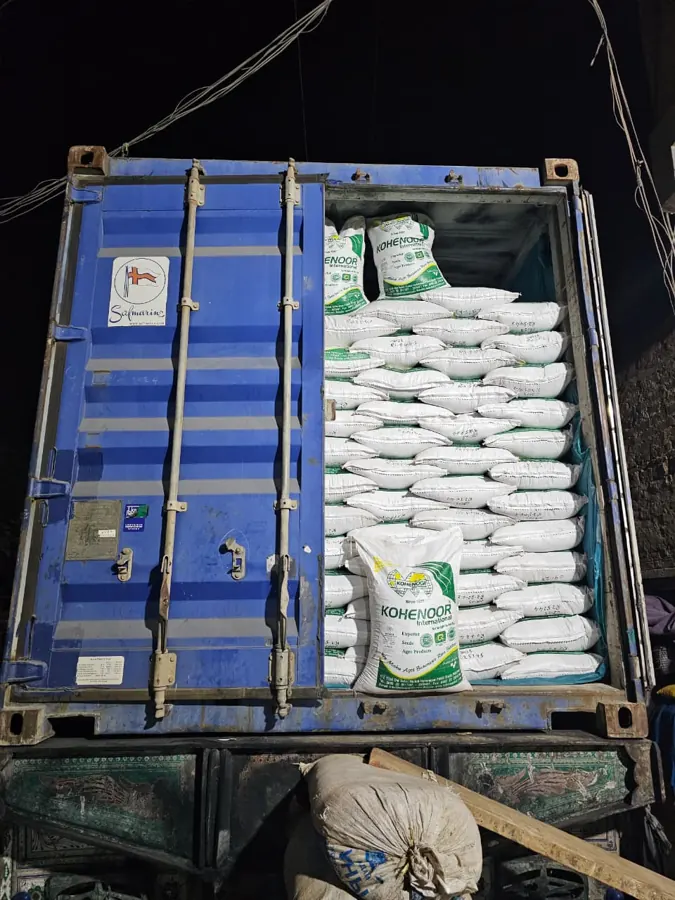
Standard packing for nigella (kalonji) seed is 25 kg, in woven polypropylene bags with an inner polyethylene liner. Each pack is printed or labelled with product, variety or grade, lot number, net weight, origin (Pakistan), exporter and any text the importing country's labelling rules require, and closed with a sewn tear-off tag. Private-label printing is available with artwork two weeks before loading.
A 20ft container carries about 18–20 MT (about 720 x 25 kg per 20ft) loose-stacked on a kraft-paper floor in a brick pattern with a cardboard door wall; a 40ft carries about 26 MT. Palletised loads on ISPM 15 heat-treated pallets take roughly 10% less and are used for Europe, East Asia, North America and Australia where the container is unloaded by forklift. Desiccant bags are added for humid destinations on request. Every stuffing is photographed from empty box to applied seal and the photos go to the buyer the same day with the packing list. Full figures for every product are in the container loading guide.
Storage and shelf life. Nigella keeps 24 months at 8% moisture in sealed lined bags in a cool, dark store; oil quality (FFA) is stable for 18 months below 25 °C. Keep away from strong-smelling goods, as the seed absorbs odours.
| Container | Net cargo | Notes |
|---|---|---|
| 20ft standard | 18–20 MT | about 720 x 25 kg per 20ft; loose on kraft-paper floor |
| 40ft / 40ft HC | 26 MT | Weight-limited on dense seed; volume-limited on light seed |
| Palletised (any size) | ≈ 10% less | ISPM 15 pallets, shrink-wrapped and strapped |
| LCL / air | 2 MT LCL | Higher per-kg rate; used for trial lots |
Documents and import compliance
Every container of nigella (kalonji) seed leaves with the phytosanitary certificate from the Department of Plant Protection (DPP) Karachi carrying the importer's additional-declaration wording, a certificate of origin from the Hyderabad Chamber of Commerce, the certificate of analysis and MSDS, commercial invoice, packing list and bill of lading, plus a fumigation certificate and pre-shipment inspection report where the destination requires them. The table lists what the main destinations for this product ask for; the documents guide explains each certificate and the import guide shows the sequence.
| Country | Authority | Documents required | Transit from Karachi |
|---|---|---|---|
| United Arab Emirates | MOCCAE | Phytosanitary certificate; Certificate of origin; ISTA test report; commercial invoice, packing list, bill of lading | 7–10 days sea from Karachi |
| Saudi Arabia | MEWA / SFDA | Phytosanitary certificate; Certificate of origin; SABER registration where applicable; commercial invoice, packing list, bill of lading | 8–12 days sea |
| Egypt | CAPQ | Phytosanitary certificate; Certificate of origin; Import permit; commercial invoice, packing list, bill of lading | 12–16 days sea |
| Türkiye | Ministry of Agriculture and Forestry | Phytosanitary certificate; Certificate of origin; Kontrol Belgesi; commercial invoice, packing list, bill of lading | 14–18 days sea |
| Germany | BVL / EU | Phytosanitary certificate; Certificate of origin; EU TRACES CHED-PP; commercial invoice, packing list, bill of lading | 22–26 days sea |
| United Kingdom | APHA / DEFRA | Phytosanitary certificate; Certificate of origin; IPAFFS pre-notification; commercial invoice, packing list, bill of lading | 22–26 days sea |
| United States | USDA APHIS | Phytosanitary certificate; Certificate of origin; APHIS import permit where required; commercial invoice, packing list, bill of lading | 30–40 days sea |
HS classification. Nigella seed is classified under HS 1207.99 (other oil seeds) in most tariffs, though some administrations use 0910.99 (other spices) for spice-grade retail packs; state the use on the invoice. EU and UK imports enter as food with a COA and CHED-D; the US importer files FDA prior notice; Egypt requires an import permit; Türkiye a Kontrol Belgesi for seed for sowing only. Duty is zero in the EU (GSP+) and the US and low in the Gulf.
Season, new crop and availability
Harvest March–April; new-crop seed ships from May after drying and cleaning. Nigella stores well and prior-crop stock is available year-round from a cool store, stated as such with its current oil content.
Oil pressers in Germany and the Gulf contract new crop in May–June for the year; spice traders buy through the year. Reserve new-crop volume by February.
The availability calendar shows every product month by month, and prior-crop lots are always described as such on the pro forma.
Price factors and how to get today's rate
Kohenoor does not publish a price for nigella (kalonji) seed because a price is only meaningful for a specific lot, grade, pack, quantity and date. A firm FOB Karachi or CIF quote in USD per kg or per MT comes back within 24 hours of an enquiry and is held for 7–14 days. What moves the number, in order of size:
- Crop year and timing. Pre-harvest bookings are fixed and usually lowest; spot prices rise in a short crop or when prior-crop stock runs down before new crop. Difference between the two can be 15–20%.
- Grade and purity. Sortex grade is priced above machine-clean; lots with oil content above 36% or a reported thymoquinone value command a premium from oil pressers. Aflatoxin, pesticide and thymoquinone tests are itemised.
- Packing. 25 kg loose bags are the base; 50 kg is slightly cheaper per kg; 10 kg, cartons, private label and palletising add 2–8%.
- Quantity. Each additional container in one contract is priced 2–5% lower; LCL lots cost 20–40% more per kg because inspection, documents and handling are the same for 2 MT as for 20 MT.
- Incoterm. FOB Karachi is the base; CIF adds freight and insurance at the current line rate for your port; road delivery to Afghanistan, Iran and Central Asia is priced per truck.
- Tests and treatment. Third-party COA, residue or aflatoxin panels, SGS inspection, fumigation and seed treatment are itemised at cost.
Samples. 200 g to 1 kg from the offered lot is free against courier charges (typically USD 40–90) and goes out with the current report. Larger trial lots are invoiced at the container rate. The full logic, MOQ table and sample policy are on seed prices and MOQ.
How this compares
Nigella is compared with sesame and castor as an oilseed and with cumin and fenugreek as a spice; the table takes the oilseed view.
| Criterion | Nigella (Kalonji) Seed | <a href="/products/sesame/">Sesame Seed</a> | <a href="/products/castor/">Castor Seed</a> |
|---|---|---|---|
| Oil content | 32–38% | 50–52% | 45–50% |
| Edible | Yes | Yes | No (industrial) |
| Main buyers | Oil pressers, spice, supplements | Crushers, tahini, bakery | Castor oil crushers |
| Moisture std | 8% max | 6% max | 8% max |
| Marker compound | Thymoquinone | Sesamin (black) | Ricinoleic acid |
| Harvest | Mar–Apr | Oct–Nov | Nov–Jan |
| HS | 120799 | 120740 | 120730 |
Markets served
Kohenoor has shipped nigella (kalonji) seed to United Arab Emirates, Saudi Arabia, Egypt, Türkiye, Germany, United Kingdom, United States. Demand is led by cold-press oil producers and supplement makers in Germany, the UK, the US and the Gulf, and by whole-spice traders in the UAE, Saudi Arabia, Egypt and Türkiye. Each destination has its own permit and phytosanitary wording; the country pages under markets summarise them and we prepare the certificate to match before DPP inspection.
Specialist site and further reading
Detailed agronomy, variety trials and technical downloads for nigella (kalonji) seed are published on our specialist site herbnseed.com. Variety-level agronomy (sowing rate, cutting schedule, seed standards, trial data) is on our reference site worldseed.net: nigella sativa. For pricing, MOQ and shipping use the quote form on this page; the lab and sorting line are described on the quality page, and all 28 lines are listed under products.
Frequently asked questions
What oil content does Pakistani nigella have?
32–38% by cold press, with thymoquinone typically 0.5–1.5% of the oil. We report both on the certificate of analysis when the buyer is an oil presser or supplement manufacturer; thymoquinone is measured by HPLC at a third-party laboratory.
Is nigella the same as black cumin or black sesame?
No. Nigella sativa (kalonji) is a different plant from black cumin (Bunium persicum) and from black sesame. The HS code 120799 (other oil seeds) applies to nigella and the botanical name appears on every document.
Can you supply nigella in retail packs?
Private-label 100 g to 1 kg packs can be arranged through our packing partner. Bulk 25 kg bags are standard for export.
What documents accompany nigella to the EU?
Phytosanitary certificate, certificate of origin (GSP+), certificate of analysis with aflatoxin and pesticide results, packing list, invoice and bill of lading, plus CHED-D pre-notification by the importer. Fumigation certificate on request.
What is the difference between machine-clean and Sortex nigella?
Machine-clean is de-stoned and air-screened to 99% purity for oil pressing and industrial blends. Sortex grade is optically sorted to 99.5% with uniform black colour and no brown or immature seed, for retail spice and whole-seed bakery use.
How much nigella fits in a 20ft container?
18–20 MT in 25 kg bags loose-stacked (720–800 bags); 16–18 MT palletised. A 40ft carries 26 MT. LCL lots of 2 MT are available.
When is new-crop nigella available?
From May after the March–April harvest, drying and cleaning. Prior-crop stock is available year-round from a cool store with its current oil content on the COA.
Does nigella need steam sterilisation for spice use?
Only where the buyer's microbial specification requires it; whole nigella normally has a low plate count. Steam sterilisation is available through a partner facility and is not used for oil-press lots because it affects oil quality.
How should nigella be stored?
Sealed lined bags in a cool, dark, odour-free store; 24 months at 8% moisture. Oil pressers should use stock within 18 months to keep FFA low.
Do you supply sowing-grade nigella?
Yes, on request, with an ISTA-format germination report, mainly to Central Asian growers. Sow at 8–10 kg/ha in October–November at 1 cm depth; harvest is 150–160 days.
Get today's FOB rate
Tell us the product, quantity and destination port. The export desk replies within 24 hours with price, MOQ, documents and transit time.
export@kohenoorint.com · +92 310 4929292 · Reply within 24 hours