 Seeds Exporter
Persian Clover Seed exporter — Pakistan origin
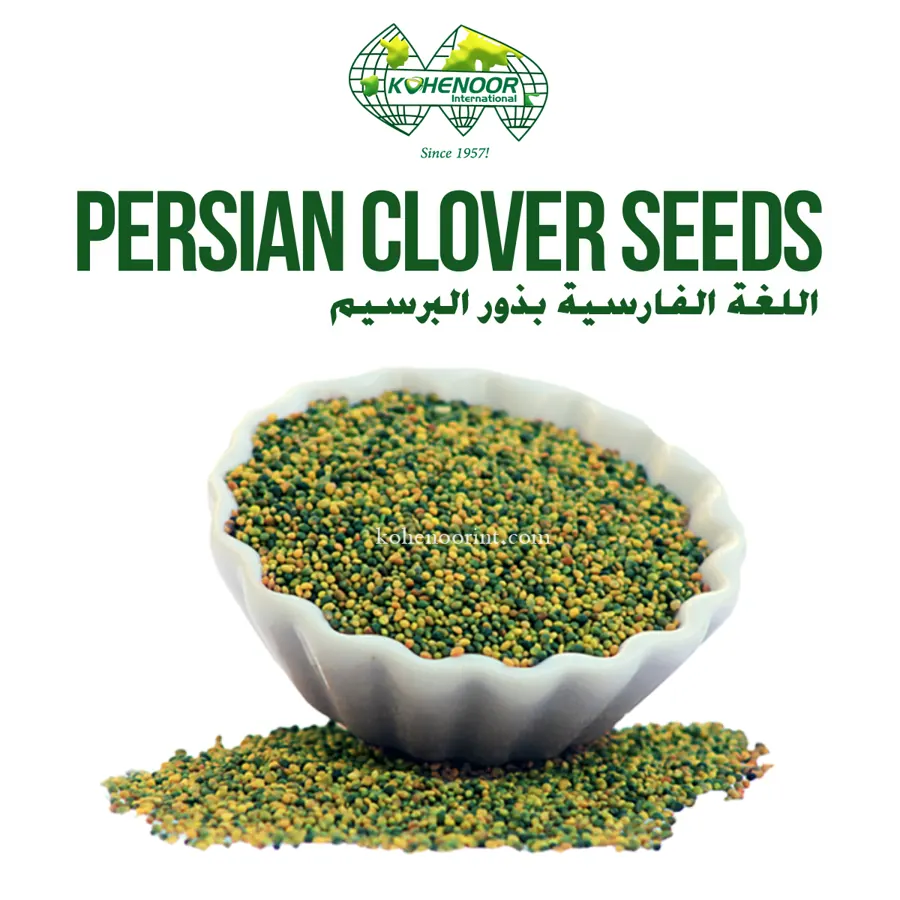
Persian clover (shaftal) seed, variety Shaftal, is exported at 99% purity and 85% germination in 25 kg and 50 kg bags under HS 120922. It is the winter forage legume for colder, higher-altitude dairy regions where berseem is cut short by frost: Iran, Afghanistan, Jordan, northern Iraq and eastern Türkiye.
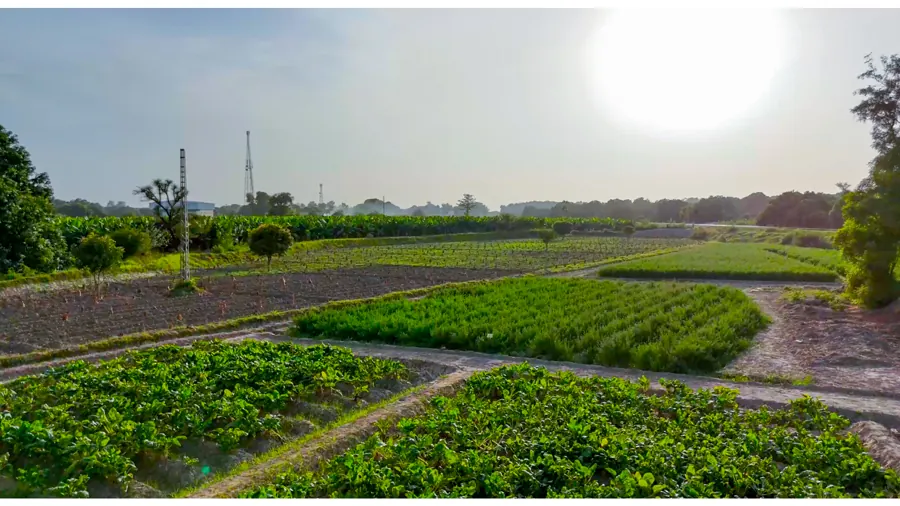
Kohenoor multiplies Persian clover with contracted growers in Punjab and cleans it on the same Sortex lines as alfalfa, so small-seeded weeds and dodder are removed before the lab test. With roughly 1.3 million seeds per kg it is the cheapest legume per hectare in the catalogue.
Quick answer
Specification
Standard export specification for persian clover seed, as it appears on the pro forma invoice and the lot report. Custom specifications (higher purity, treated seed, different pack, private label) are quoted on request.
| Parameter | Specification |
|---|---|
| Botanical name | Trifolium resupinatum |
| HS code | 120922 |
| Varieties / grades | Shaftal |
| Purity | 99% min |
| Germination | 85% min |
| Variety | Shaftal (multi-cut) |
| Moisture | 10% max |
| Inert matter | 1% max |
| Other crop seed | 0.5% max |
| Weed seed | 0.5% max |
| Dodder (Cuscuta spp.) | Nil in 500 g |
| Thousand-seed weight | 0.7–0.8 g (approx. 1,300,000 seeds/kg) |
| Colour / appearance | Olive to dark brown, small, uniform |
| Hard seed | 15% max |
| Frost tolerance | to about −8 °C |
| Sowing rate | 8–10 kg/ha |
| Packing | 25 kg / 50 kg |
| MOQ | 1 x 20ft |
| Origin | Pakistan (Sindh / Punjab unless stated) |
Varieties and grades
Shaftal. The Pakistani and Afghan landrace type of Trifolium resupinatum var. majus, a tall, hollow-stemmed, multi-cut Persian clover that gives 3–4 cuts from January to May after an October sowing and tolerates frost that would stop berseem. It is the type used across the Iranian plateau, northern Afghanistan, Kurdistan and eastern Türkiye, where it is sown alone or with annual ryegrass and oats. Buyers choose it for its low sowing rate (8–10 kg/ha, a third of berseem), its cold tolerance and its palatability to cattle and sheep; it makes a fine-stemmed hay when the last cut is dried.
We supply Shaftal only, untreated, at 99% purity. Because the seed is so small, purity is achieved on Sortex optical sorters rather than sieves alone, and every lot is checked for dodder on a 500 g sample. Sowing-rate advice by country is on the worldseed.net variety page.
Uses by industry
Who buys persian clover seed from Pakistan and what they do with it.
- Dairy and cattle farms on cold plateaus. Winter green chop from January to May in Iran, Afghanistan and eastern Türkiye where berseem is frost-damaged.
- Sheep and goat producers. Grazed or cut-and-carry pasture in Jordan and northern Iraq; less bloat risk than alfalfa when mixed with grass.
- Mixed winter sowings. 6 kg/ha Persian clover with 20 kg/ha annual ryegrass is the standard Iran and Afghanistan winter mix; both ship in one container.
- Hay makers. Last cut dried for fine-stemmed hay for small ruminants and horses.
- Break crop before maize. Nitrogen-fixing winter cover ploughed in before spring maize in Central Asian rotations.
Quality control and testing
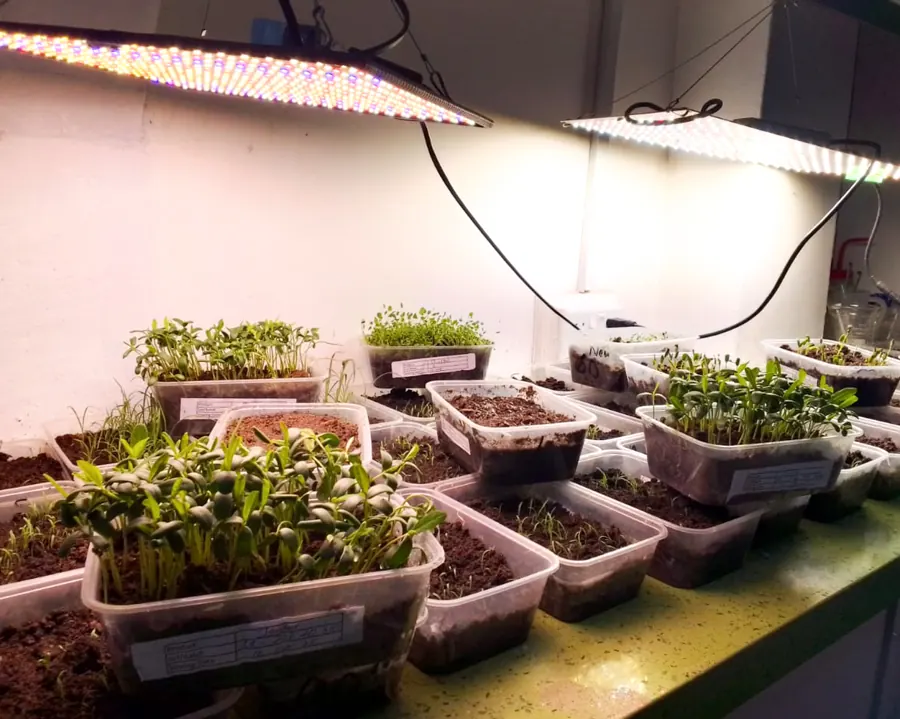
Every lot of persian clover seed offered for export is tested in Kohenoor's own laboratory in Hyderabad to the ISTA International Rules: a submitted sample of at least 1 kg drawn with a stick trier from a minimum of 10% of bags, purity analysis by species on a working sample (pure seed, other crop seed, weed seed and inert matter by weight), germination on 4 x 100 seeds in a controlled chamber for the prescribed period, moisture by the oven method and a thousand-seed weight. Forage legumes and small-seeded grasses also get a separate 500 g count for dodder (Cuscuta spp.) and other quarantine weed seed, which is the item most import permits ask about. Results go on an ISTA-format report with the lot number that appears on the bag labels, packing list and phytosanitary certificate.
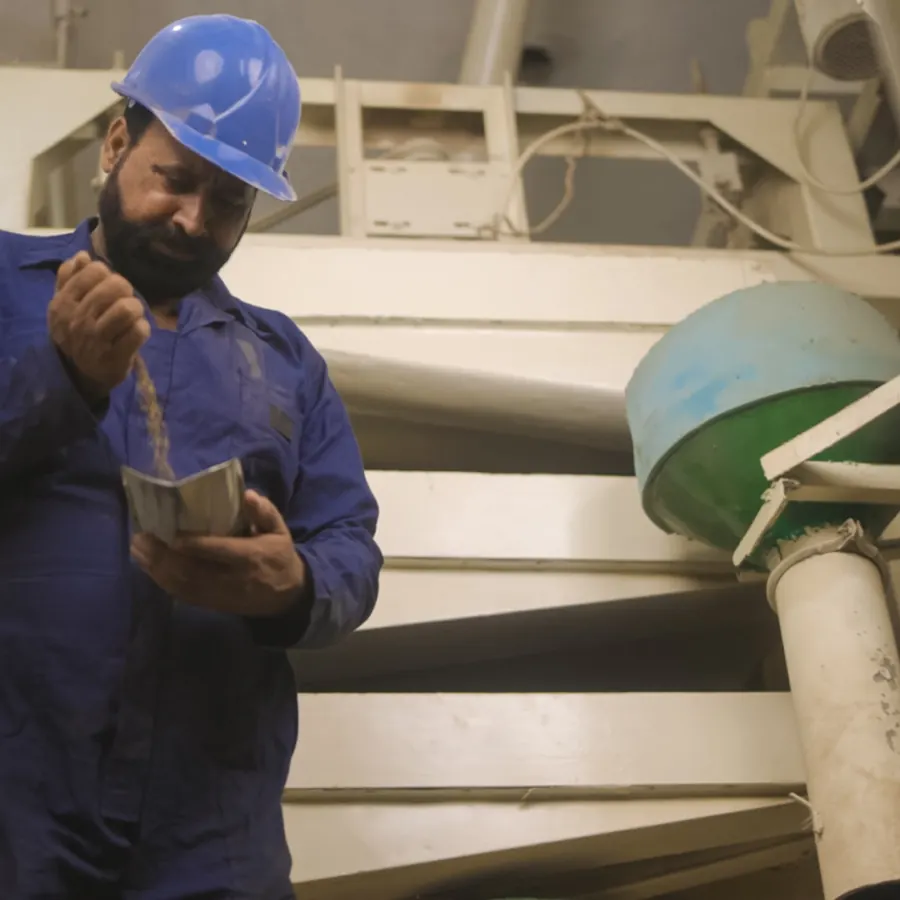
Before the lab sees the lot it has been through air-screen cleaning, a gravity table and Buhler Sortex optical sorting, which removes off-colour, immature and weed seed that sieving cannot. A lot that misses the specification is re-sorted or dropped from export; it is never blended up. Prior-crop lots are re-tested before dispatch and no container leaves on a report older than 90 days.
Persian clover seed is among the smallest in the catalogue, so purity analysis uses a 10 g working sample examined under magnification, and the dodder count is run on 500 g because a single dodder seed per 100 g would be missed at the standard working-sample size. Hard seed is reported separately (up to 15% in a fresh lot) and counted as viable per ISTA rules.
How to verify on arrival. Draw a composite sample from at least 10 bags with a trier, seal and label it with the lot number, and test within 14 days at your NPPO or any ISTA-accredited station. Compare against the report using the ISTA tolerance tables (about 6 percentage points between two 400-seed germination tests at the 85% level, 0.5–1.0 points for purity at 99%). If a result falls outside tolerance, send the report and the sealed bag labels within 30 days; we re-test the 1 kg reference sample we keep from every lot for 12 months and settle any confirmed difference by price adjustment or replacement.
Packing, loading and shipping
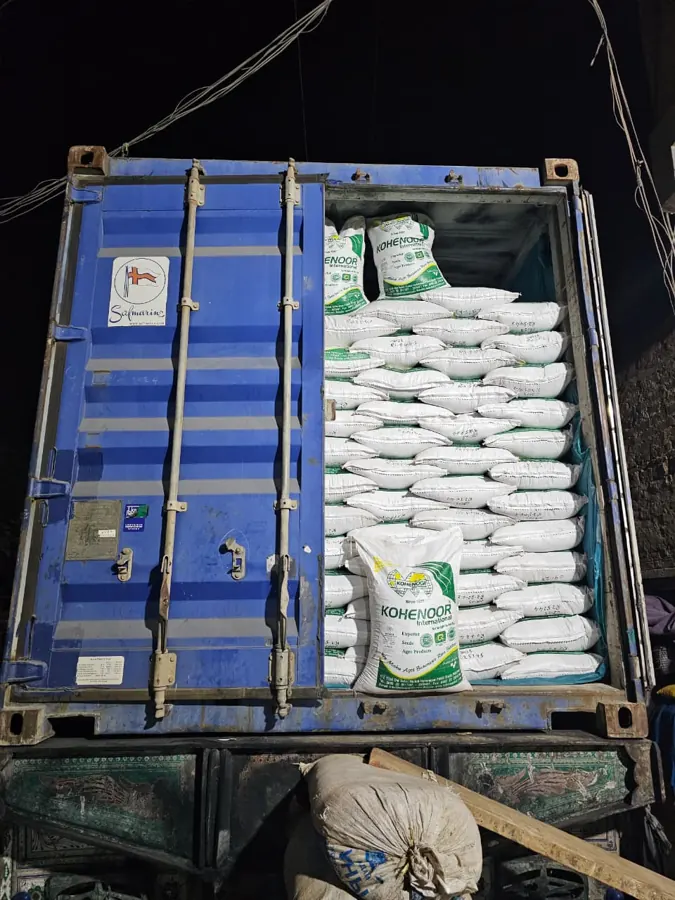
Standard packing for persian clover seed is 25 kg / 50 kg, in woven polypropylene bags with an inner polyethylene liner. Each pack is printed or labelled with product, variety or grade, lot number, net weight, origin (Pakistan), exporter and any text the importing country's labelling rules require, and closed with a sewn tear-off tag. Private-label printing is available with artwork two weeks before loading.
A 20ft container carries about 18–20 MT (about 720 x 25 kg per 20ft) loose-stacked on a kraft-paper floor in a brick pattern with a cardboard door wall; a 40ft carries about 26 MT. Palletised loads on ISPM 15 heat-treated pallets take roughly 10% less and are used for Europe, East Asia, North America and Australia where the container is unloaded by forklift. Desiccant bags are added for humid destinations on request. Every stuffing is photographed from empty box to applied seal and the photos go to the buyer the same day with the packing list. Full figures for every product are in the container loading guide.
Storage and shelf life. Persian clover is hard-seeded and stores well: a lot that tests 85% will usually still test 80% or better after 12 months in dry storage below 25 °C, and two years at 10% moisture in lined bags. We re-test before dispatch and never ship on a certificate older than 90 days.
| Container | Net cargo | Notes |
|---|---|---|
| 20ft standard | 18–20 MT | about 720 x 25 kg per 20ft; loose on kraft-paper floor |
| 40ft / 40ft HC | 26 MT | Weight-limited on dense seed; volume-limited on light seed |
| Palletised (any size) | ≈ 10% less | ISPM 15 pallets, shrink-wrapped and strapped |
| LCL / air | 5 MT LCL | Higher per-kg rate; used for trial lots |
Documents and import compliance
Every container of persian clover seed leaves with the phytosanitary certificate from the Department of Plant Protection (DPP) Karachi carrying the importer's additional-declaration wording, a certificate of origin from the Hyderabad Chamber of Commerce, the ISTA-format purity and germination report, commercial invoice, packing list and bill of lading, plus a fumigation certificate and pre-shipment inspection report where the destination requires them. The table lists what the main destinations for this product ask for; the documents guide explains each certificate and the import guide shows the sequence.
| Country | Authority | Documents required | Transit from Karachi |
|---|---|---|---|
| Iran | PPO Iran | Phytosanitary certificate; Certificate of origin; Import licence; commercial invoice, packing list, bill of lading | 3–5 days sea / road via Taftan |
| Afghanistan | Phytosanitary certificate; Certificate of origin; commercial invoice, packing list, bill of lading | 2–5 days road | |
| Jordan | MoA Jordan | Phytosanitary certificate; Certificate of origin; commercial invoice, packing list, bill of lading | 12–16 days sea |
| Iraq | Ministry of Agriculture | Phytosanitary certificate; Certificate of origin; Pre-shipment inspection; commercial invoice, packing list, bill of lading | 10–14 days sea |
| Türkiye | Ministry of Agriculture and Forestry | Phytosanitary certificate; Certificate of origin; Kontrol Belgesi; commercial invoice, packing list, bill of lading | 14–18 days sea |
HS classification. HS 1209.22 (clover seed), shared with berseem. Iran requires an import licence from the Plant Protection Organisation before loading and accepts road delivery via Taftan or sea to Bandar Abbas; Türkiye requires a Kontrol Belgesi issued to the importer; Afghanistan clears at Torkham or Chaman on the phytosanitary certificate and certificate of origin. Seed for sowing is duty-free in each of these markets.
Season, new crop and availability
Sown October–November, harvested April–June; new-crop seed ships from June. Buyers in Iran and Afghanistan typically take delivery by road via Taftan or Torkham in August–September for autumn sowing; Türkiye and Jordan take sea shipments loading July–August for September arrival.
Prior-crop seed is available from December to May, re-tested, for late sowings on the plateau where the window runs into November. Reserve new-crop volume by March for a fixed price.
The availability calendar shows every product month by month, and prior-crop lots are always described as such on the pro forma.
Price factors and how to get today's rate
Kohenoor does not publish a price for persian clover seed because a price is only meaningful for a specific lot, grade, pack, quantity and date. A firm FOB Karachi or CIF quote in USD per kg or per MT comes back within 24 hours of an enquiry and is held for 7–14 days. What moves the number, in order of size:
- Crop year and timing. Pre-harvest bookings are fixed and usually lowest; spot prices rise in a short crop or when prior-crop stock runs down before new crop. Difference between the two can be 15–20%.
- Grade and purity. Shaftal is a single export grade; price differences come from crop year and from whether the lot is Sortex-cleaned to nil dodder, which matters more for Persian clover than for any other legume because of its seed size.
- Packing. 25 kg loose bags are the base; 50 kg is slightly cheaper per kg; 10 kg, cartons, private label and palletising add 2–8%.
- Quantity. Each additional container in one contract is priced 2–5% lower; LCL lots cost 20–40% more per kg because inspection, documents and handling are the same for 2 MT as for 20 MT.
- Incoterm. FOB Karachi is the base; CIF adds freight and insurance at the current line rate for your port; road delivery to Afghanistan, Iran and Central Asia is priced per truck.
- Tests and treatment. Third-party COA, residue or aflatoxin panels, SGS inspection, fumigation and seed treatment are itemised at cost.
Samples. 200 g to 1 kg from the offered lot is free against courier charges (typically USD 40–90) and goes out with the current report. Larger trial lots are invoiced at the container rate. The full logic, MOQ table and sample policy are on seed prices and MOQ.
How this compares
Persian clover is chosen over berseem where winters are cold and over ryegrass where protein matters more than early bulk; most plateau farms sow it together with ryegrass.
| Criterion | Persian Clover Seed | <a href="/products/berseem-clover/">Berseem Clover Seed</a> | <a href="/products/ryegrass/">Ryegrass Seed</a> |
|---|---|---|---|
| Type | Annual winter legume | Annual winter legume | Annual winter grass |
| Frost tolerance | To about −8 °C | Light frost only | To about −10 °C |
| Cuts per season | 3–4 | 5–6 | 3–4 |
| Sowing rate | 8–10 kg/ha | 25–30 kg/ha | 25–30 kg/ha |
| Seeds per kg | ≈ 1,300,000 | ≈ 400,000 | ≈ 230,000 |
| Crude protein | 17–20% | 16–20% | 12–16% |
| Best fit | Iran, Afghanistan, Türkiye, Kurdistan | Iraq, Egypt, North Africa | Winter energy, mixed with clover |
Markets served
Kohenoor has shipped persian clover seed to Iran, Afghanistan, Jordan, Iraq, Türkiye. Demand is concentrated on the cold plateaus of Iran, Afghanistan, northern Iraq and eastern Türkiye, with Jordan buying for sheep pasture. Each destination has its own permit and phytosanitary wording; the country pages under markets summarise them and we prepare the certificate to match before DPP inspection.
Specialist site and further reading
Detailed agronomy, variety trials and technical downloads for persian clover seed are published on our specialist site cloverseeds.org. Variety-level agronomy (sowing rate, cutting schedule, seed standards, trial data) is on our reference site worldseed.net: persian clover shaftal. For pricing, MOQ and shipping use the quote form on this page; the lab and sorting line are described on the quality page, and all 28 lines are listed under products.
Frequently asked questions
Can Persian clover be mixed with ryegrass?
Yes, it is the standard winter mix on the Iranian and Afghan plateaus: about 6 kg/ha Persian clover with 20 kg/ha annual ryegrass. We supply both from the same shipment, packed separately with clear lot marks and separate lines on the phytosanitary certificate.
Why is the seed so small and light?
Persian clover has roughly 1.3 million seeds per kg, three times alfalfa. That is why sowing rates are only 8–10 kg/ha and why the seed must be cleaned on optical sorters; sieving alone cannot separate small weed seed or dodder from it.
Do you ship Persian clover by road to Afghanistan and Iran?
Yes. Truck loads via Torkham or Chaman reach Afghanistan in 2–5 days; Iran is served by sea to Bandar Abbas (3–5 days) or by road via Taftan. Documents are the same as for sea shipments, plus Iran's import licence.
What germination should I expect after one year of storage?
Persian clover is hard-seeded; a lot that tests 85% will usually still test 80% or better after 12 months in dry storage. We re-test before dispatch and never ship on a certificate older than 90 days.
Is shaftal the same as Persian clover?
Yes. Shaftal is the Persian, Urdu and Pashto name for Trifolium resupinatum, the multi-cut Persian clover. The phytosanitary certificate and lab report use the botanical name.
How much Persian clover seed fits in a 20ft container?
18–20 MT in 25 kg or 50 kg bags loose-stacked, or 16–18 MT palletised. Because the sowing rate is so low, one container sows roughly 2,000 hectares.
How frost-tolerant is Persian clover?
Established plants tolerate about −8 °C and short snow cover, which is why it replaces berseem on the Iranian plateau and in Afghanistan and eastern Türkiye. Seedlings are more sensitive, so sow by early November on the plateau.
Is the seed treated or inoculated?
No. Seed is supplied untreated. Persian clover nodulates with the same Rhizobium leguminosarum bv. trifolii strains as berseem, which are present in most fields of the region; inoculant is available separately if needed.
What documents does Iran require?
An import licence from the Plant Protection Organisation issued to the importer before loading, a phytosanitary certificate with the licence's wording, a certificate of origin, the ISTA-format report, invoice, packing list and the truck consignment note or bill of lading.
Can I get a smaller lot than a container?
Yes, 5 MT by LCL to Bandar Abbas, Mersin or Aqaba at a higher per-kg rate, or as part of a mixed container with ryegrass and berseem (2 MT minimum per product).
Get today's FOB rate
Tell us the product, quantity and destination port. The export desk replies within 24 hours with price, MOQ, documents and transit time.
export@kohenoorint.com · +92 310 4929292 · Reply within 24 hours